November is a quiet month for big meteor showers, but 2026 gives skywatchers three worthwhile nights. The Leonids, the fastest meteors of the year, peak on the night of Tuesday, November 17, into Wednesday, November 18. Before that, the slow and sometimes spectacular Taurids reach their two maxima under mostly dark skies around November 5 and November 12.
None of these showers will produce a storm this year. But the Moon is well behaved for all three, and on the Leonid night it sets around the time the shower’s radiant rises. That leaves the best hours of the night dark.
When is the Leonid peak in 2026?
The International Meteor Organization (IMO) puts the regular Leonid maximum at 23:45 UT on November 17, 2026. An alternative model by Mikhail Maslov places it earlier the same day, around 16:00 UT. Either way, the shower’s maximum is broad, so the practical advice is simple: watch from late on November 17 until dawn on November 18. The mornings of November 17 and 19 are worth a look too. The shower is active from about November 6 to November 30.
Under ideal, perfectly dark skies with the radiant overhead, the IMO expects a zenithal hourly rate (ZHR) of about 15. Real skies are never ideal and the radiant is never overhead for long, so most observers should expect fewer than 10 meteors an hour, often in bursts with quiet gaps between them.
Leonids hit Earth’s atmosphere at about 71 kilometres per second, faster than meteors from any other major shower. Bright ones can leave glowing trains that linger for seconds.
The Moon is on your side
First quarter Moon falls at 11:48 UT on November 17, so at the peak the Moon is a little over half lit. That sounds bad, but timing saves the night. The Leonid radiant, in the “Sickle” of Leo, only rises around midnight, and by then the Moon is setting.
Our calculations for a few cities on the peak night, in local time:
- Lisbon: Leo rises around 23:40 and the Moon sets around 00:26. Dark sky until astronomical dawn begins around 05:50.
- London: Leo rises around 22:15 and the Moon sets around 23:25. Dark sky until about 05:25.
- New York: Leo rises around 22:50 and the Moon sets around 23:55. Dark sky until about 05:10.
In each case the sweet spot is the last two or three hours before dawn, when the radiant is highest. The Royal Observatory Greenwich gives the same advice for the UK: the Moon sets before midnight and leaves the rest of the peak free of moonlight.
Observers in the Southern Hemisphere can see Leonids too, but the radiant rises later and climbs less high, so rates are lower. From Sydney, for example, Leo does not clear the horizon until a little after 2 a.m. local daylight time, not long before dawn.
Jupiter and Mars join the show
The Leonid radiant shares the sky with two bright planets this year. Jupiter and Mars both sit in Leo, just west of its brightest star, Regulus. By our calculations they pass closest to each other around November 16, a little more than 1 degree apart, a little more than twice the width of the full Moon. On the Leonid night they are still close together, rising with the radiant after midnight. Jupiter is the brilliant one; Mars is the fainter, orange-red point beside it.
You do not need to look at the radiant to see Leonids. Meteors can appear anywhere in the sky. The radiant simply tells you which way they are flying: trace a Leonid’s path backward and it should point to the Sickle. Looking 30 to 40 degrees away from the radiant often shows longer trails.
Where Leonids come from, and why 2026 is no storm year
The Leonids are debris from comet 55P/Tempel-Tuttle, which orbits the Sun about every 33 years. Every November, Earth crosses the comet’s orbit and sweeps up grains of dust. When Earth hits a fresh, dense dust trail, the shower can turn into a storm. The most famous was in 1966, when observers in the western United States saw rates that briefly reached thousands of meteors per minute. A spectacular storm in 1833 helped give birth to the scientific study of meteors.
The comet’s next perihelion is due on May 20, 2031. In 2026, the meteoroids we meet are ahead of the comet, and models do not predict a storm. Dust-trail calculations by Jérémie Vaubaillon and Mikiya Sato, summarised in the IMO’s 2026 calendar, find a few close encounters with old, low-density trails on November 17–19. The most notable are a trail from 1800 around 21:55 UT on November 18 and trails from 1699 around 03:30–03:50 UT on November 19. None is expected to produce a significant outburst, though Sato notes that the low ejection velocities might give a modest rise in activity. If you are out on those nights anyway, it is worth noting what you see.
Before the Leonids: the Taurids
If the Leonids are about speed, the Taurids are about slow, bright meteors. They come from the debris of comet 2P/Encke and arrive at only 27 to 29 kilometres per second. Their rates are low, typically 5 to 10 an hour at best. But a larger share of them are bright, and the occasional slow fireball can be striking. The Taurid radiant, in Taurus, is up for most of the night and highest around 1 a.m., so they are a good shower for the evening.
There are two branches, and in 2026 both peak under kind skies:
- Southern Taurids, around Thursday, November 5: ZHR about 5 to 10. A thin waning crescent Moon rises only in the early hours (around 03:15 from Lisbon), so the evening and first half of the night are dark.
- Northern Taurids, around Thursday, November 12: ZHR about 5. New Moon is on November 9, so the sky is dark all night.
The IMO notes that Taurid activity tends to plateau for roughly ten days in early and mid-November. The moonless stretch around the November 9 new Moon is a good time to watch for both branches.
How to watch
- Get away from lights. Faint meteors make up most of a shower, and light pollution hides them first. Even a park away from street lamps helps.
- Give your eyes 20 to 30 minutes to adapt, and keep phone screens dim or off.
- Lie back and look up. Take in as much sky as possible rather than staring at one point. No telescope or binoculars needed.
- Dress for the cold. Pre-dawn temperatures in mid-November can be close to freezing in much of Europe and North America, and you will be still for a long time.
- Be patient. With rates this low, 30 minutes of nothing followed by two meteors in a minute is normal.
For photographers, a wide-angle lens on a tripod, a high ISO and a run of continuous 15- to 25-second exposures is the standard approach. Leonids are fast and brief; Taurids are slower and more forgiving.
The 2026 Leonids will not repeat 1966. But with dark skies after moonset, two bright planets in Leo and a chance of a few quick, bright streaks, the night of November 17–18 is worth setting an alarm for.
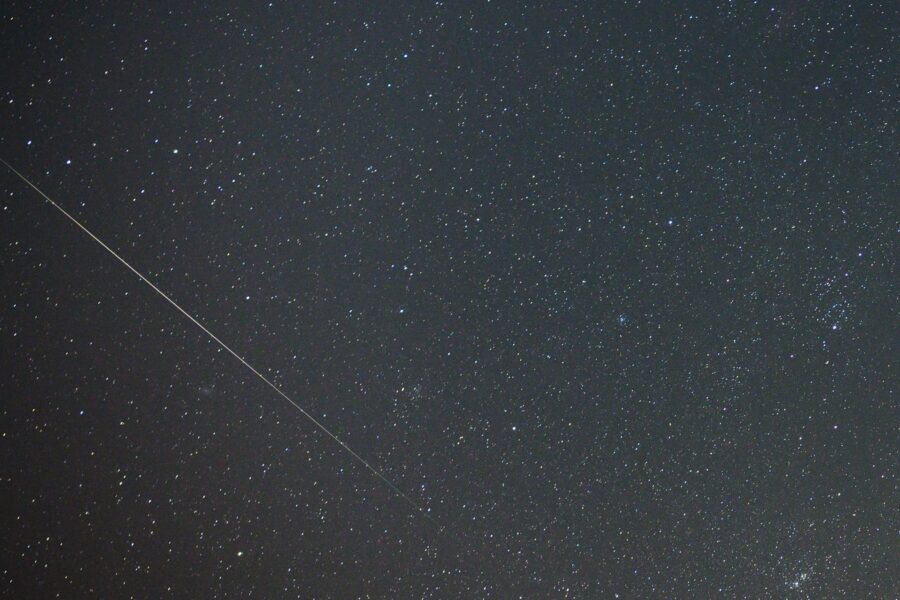
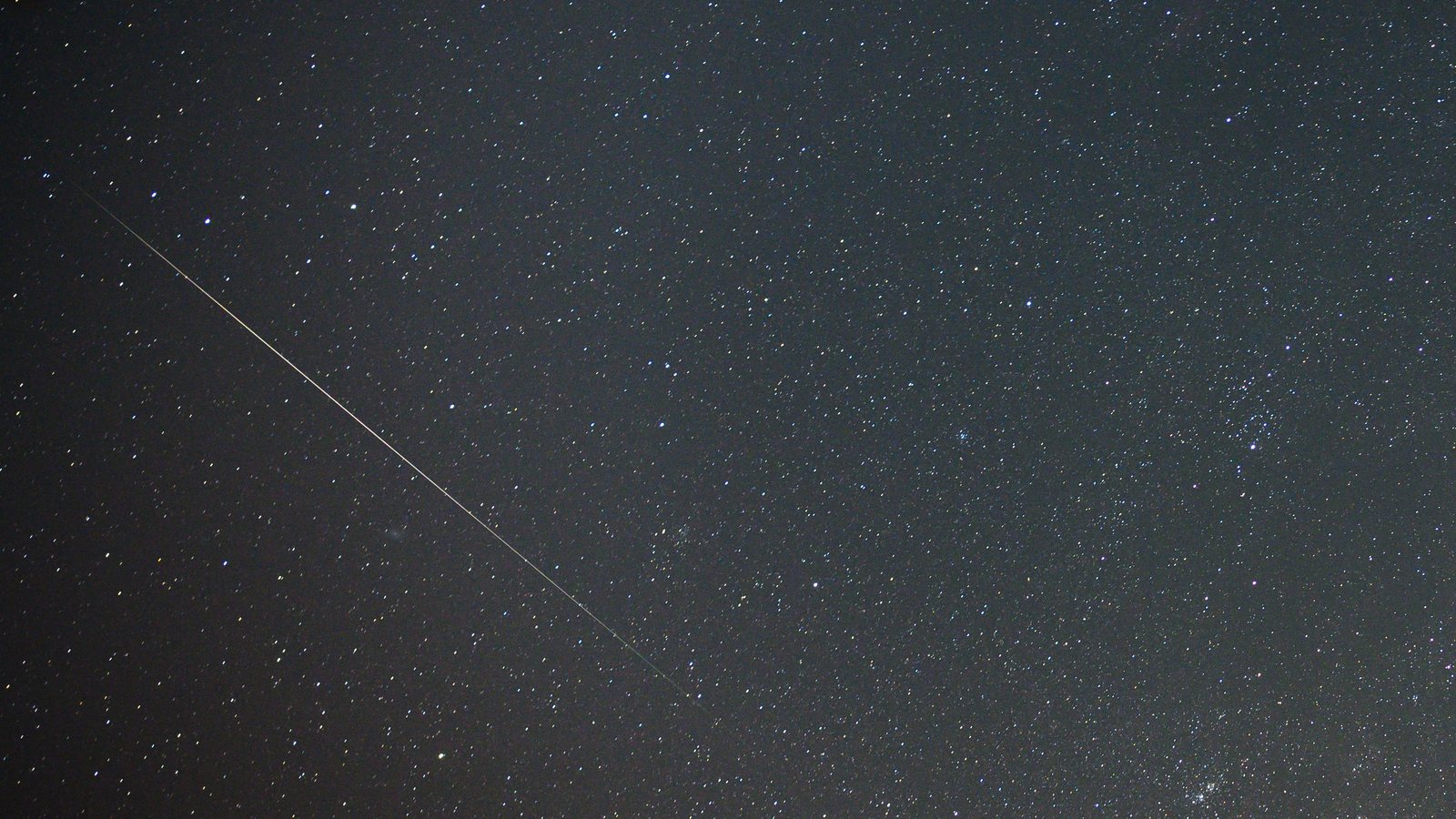
Image: A Leonid meteor crosses a star field. Credit: David Wipf via Wikimedia Commons, CC BY 2.0.
Sources
Sources
- 2026 Meteor Shower Calendar (IMO INFO 3-25) — International Meteor Organization. Consulted 2026-11-02.
- Leonid meteor shower 2026: when and where to see it in the UK — Royal Observatory Greenwich. Consulted 2026-11-02.
- Leonid meteor shower: All you need to know in 2026 — EarthSky. Consulted 2026-11-02.
- Leonids — NASA Science, Solar System meteors and meteorites. Consulted 2026-11-02.
- Moon phases, rise and set times, and planet positions — Poldot calculations with the Skyfield library and JPL DE421 ephemeris. Consulted 2026-11-02.
- Leonid meteor (photo) — David Wipf, Wikimedia Commons, CC BY 2.0. Consulted 2026-11-02.