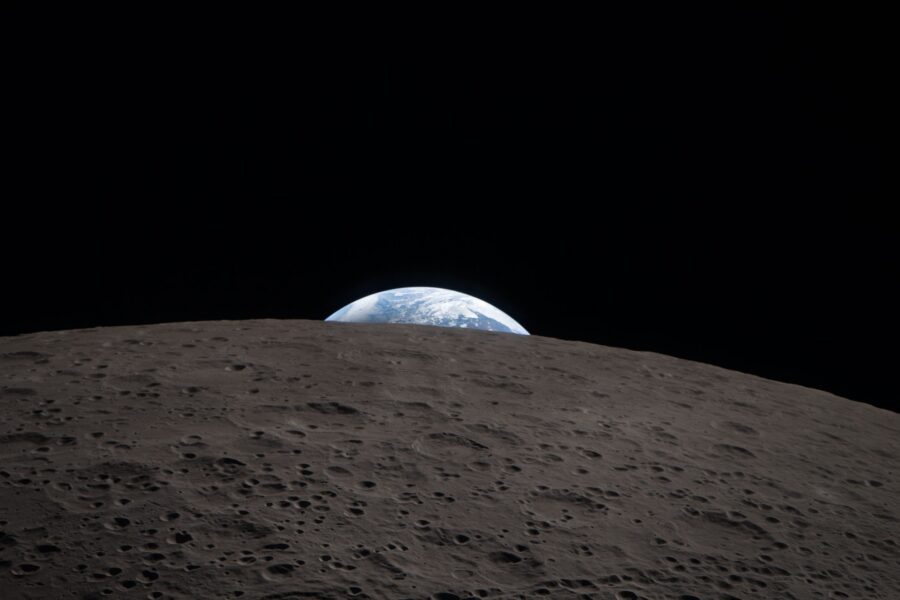
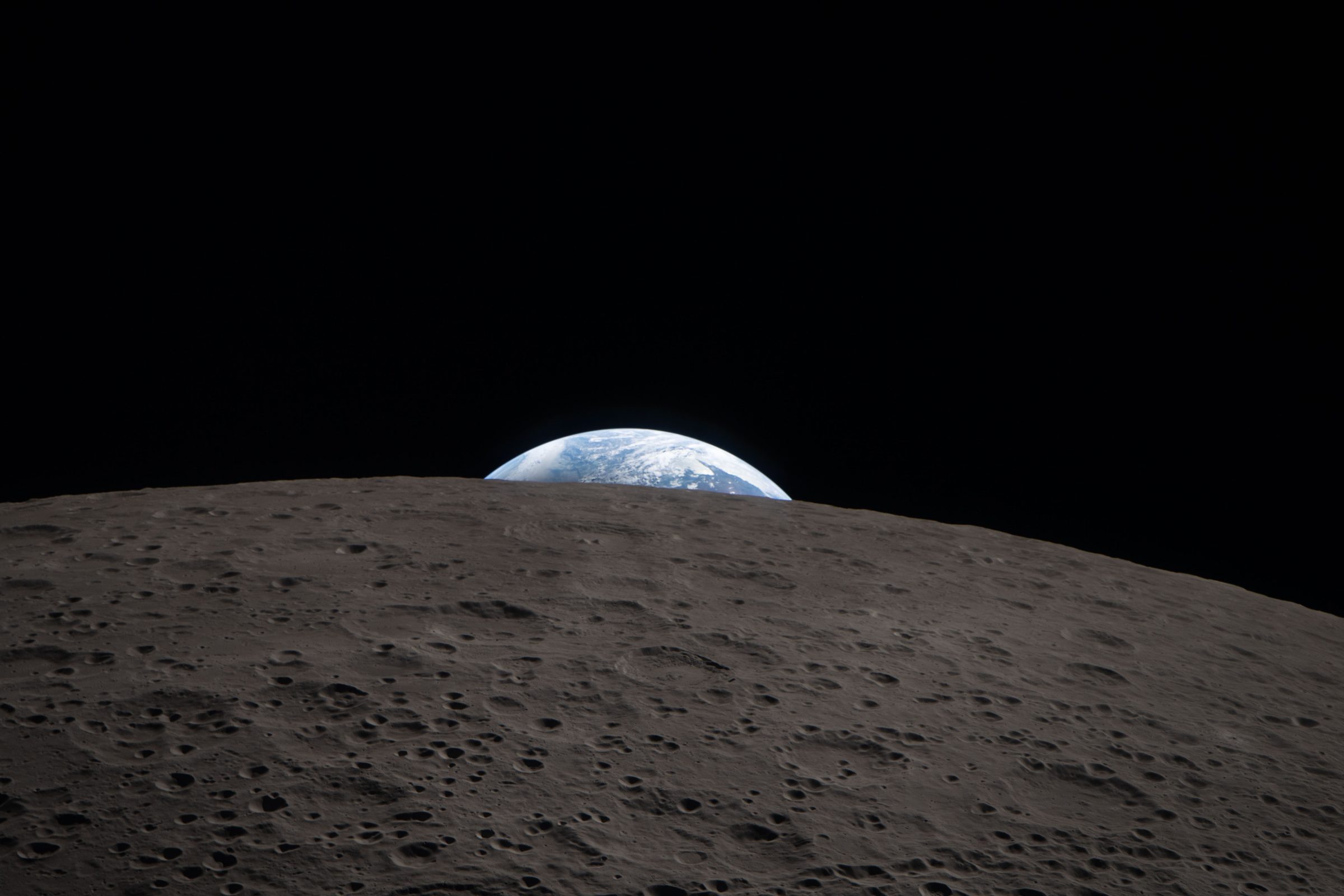
On April 6, 2026, four astronauts looked out of an Orion capsule window and watched Earth slip behind the Moon. The photo they took, an Earthset over the lunar far side, echoes the Apollo 8 Earthrise of 1968. It also marked the point where Artemis II stopped being a plan and became a record.
NASA astronauts Reid Wiseman, Victor Glover, and Christina Koch, along with Canadian Space Agency astronaut Jeremy Hansen, reached 252,756 miles from Earth during the flyby. That is farther than any humans have traveled, beating the distance set by Apollo 13 in 1970. They splashed down in the Pacific off San Diego on April 10, 2026, after a nearly 10-day flight.
What Artemis II actually tested
Artemis II was the first crewed flight of NASA’s Space Launch System rocket and Orion spacecraft. The rocket lifted off from Kennedy Space Center on the evening of April 1, Eastern time. Power and propulsion came from ESA’s European Service Module, whose solar arrays unfolded about 20 minutes after launch.
According to ESA, the crew took manual control of Orion about three hours into the flight to practice proximity maneuvers near the rocket’s spent upper stage, a skill that future crews will need when they meet a lander. The translunar injection burn on flight day 2 was precise enough that two of three planned trajectory corrections on the way out were canceled. Orion then flew a free-return path around the Moon, which uses lunar gravity to swing the spacecraft home without a major engine burn.
During the flyby, the crew spent about seven hours taking turns at the windows, photographing the surface for scientists on the ground. Re-entry, parachutes, and recovery by the USS John P. Murtha closed out the test.
NASA tallied about 695,000 miles flown in total, from launch through two Earth orbits, the lunar flyby, and the trip home.
A different Artemis III
Before 2026, Artemis III was meant to be the first landing. In late February, NASA changed that. The mission is now a roughly 14-day flight in low Earth orbit, and NASA officials said on October 23, 2026, that it remains on track for summer 2027.
The crew will be NASA astronauts Randy Bresnik, Frank Rubio, and Andre Douglas, with ESA astronaut Luca Parmitano. The plan has three launches. Blue Origin first launches a test version of its Blue Moon Mark 2 lander into orbit about 273 miles up. SLS then launches Orion, which docks with Blue Moon on flight day 3. Crew members will spend about two days entering and evaluating the lander’s cabin and life-support systems.
Around flight day 6, SpaceX launches a Starship test article from Florida. Orion undocks from Blue Moon, rendezvouses with Starship, and docks to a port on its nose for about two hours. The crew will not enter Starship. NASA says the goal is to learn how the two vehicles fly and communicate as a docked stack.
Why rehearse in Earth orbit
The logic resembles Apollo 9, which tested the lunar module in Earth orbit in 1969 before anyone tried it near the Moon. Docking, life support, software, and emergency procedures are easier to troubleshoot a few hundred miles up, where a crew can return home in hours rather than days.
It is also a hedge on timing. Both commercial landers are still in development, and NASA has told the companies it will certify each system before a crew rides it to the surface. Each provider must also fly an uncrewed demonstration first. NASA is targeting 2028 for landings on what are now designated Artemis IV and V, near the Moon’s south pole.
What to watch
Before Artemis III launches, NASA plans to stack its SLS rocket and run a tanking test, which officials described as a year-end milestone. Blue Origin and SpaceX must each deliver flight-ready test articles on time, which will be the bigger schedule question. Those dates are targets, and Artemis dates have moved before.
Artemis II showed that the rocket, capsule, and European service module can carry a crew around the Moon and back. Artemis III is about the hardware that has not flown with astronauts yet.
Image: NASA (Artemis II crew photo art002e021278, April 6, 2026).
Sources
Sources
- NASA Welcomes Record-Setting Artemis II Moonfarers Back to Earth — NASA, April 2026. Consulted 2026-10-31.
- Artemis II: splashdown — ESA, April 2026. Consulted 2026-10-31.
- Artemis II Flight Day 10: Live Re-Entry Updates — NASA, April 10, 2026. Consulted 2026-10-31.
- NASA’s Artemis III Mission to Test Future Moon Lander Operations — NASA. Consulted 2026-10-31.
- NASA, Partners Accelerate Lander Development for 2028 Moon Missions — NASA. Consulted 2026-10-31.
- NASA eyeing year-end tanking test and summer 2027 launch for Artemis III — Aerospace America. Consulted 2026-10-31.
- Artemis III — ESA. Consulted 2026-10-31.
- Artemis III on Track for Summer 2027 as NASA Maps Its Path to a Moon Landing — Spaceflight News, October 2026. Consulted 2026-10-31.