A rose-colored stone picked up in the Sahara Desert in 2022 turns out to be one of the oldest pieces of Mars ever found on Earth. In a paper published October 29, 2026, in the journal Science, a team led by Yang Liu of NASA’s Jet Propulsion Laboratory reports that the Martian meteorite Teghaza 001 formed at least 4.1 billion years ago, when the Red Planet was still young.
That age matters because most Martian meteorites in collections are geologically young, while much of the Martian surface is ancient. Teghaza 001 offers a rare sample of the planet’s early crust, and of the water that once moved through it.
A rock from the desert, a story from early Mars
The meteorite is named after the Teghaza salt plain in Mali, the region where meteorite hunters found it. According to the Meteoritical Bulletin, eight matching stones were recovered with a total mass of about 798.5 grams, or nearly 2 pounds. The largest piece weighs 442 grams. NASA says it is one of roughly 435 known meteorites from Mars.
Researchers at the University of New Mexico first confirmed it was Martian by measuring its oxygen isotopes, which act as a chemical fingerprint for different planetary bodies. It was initially classified as a shergottite, the most common type of Martian meteorite. Liu told NASA she almost passed on studying it, but its odd textures and unusual minerals caught her attention.
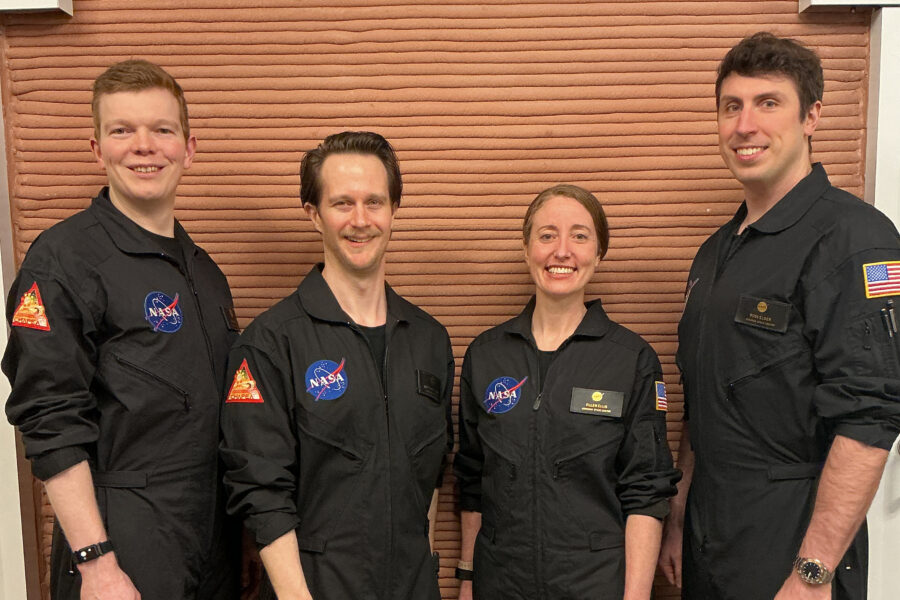
“It was only after we started looking closely that we realized this meteorite is really unique,” Liu said in NASA’s announcement. “One of the paper’s reviewers called it a Rosetta Stone for Mars.”
How scientists dated it
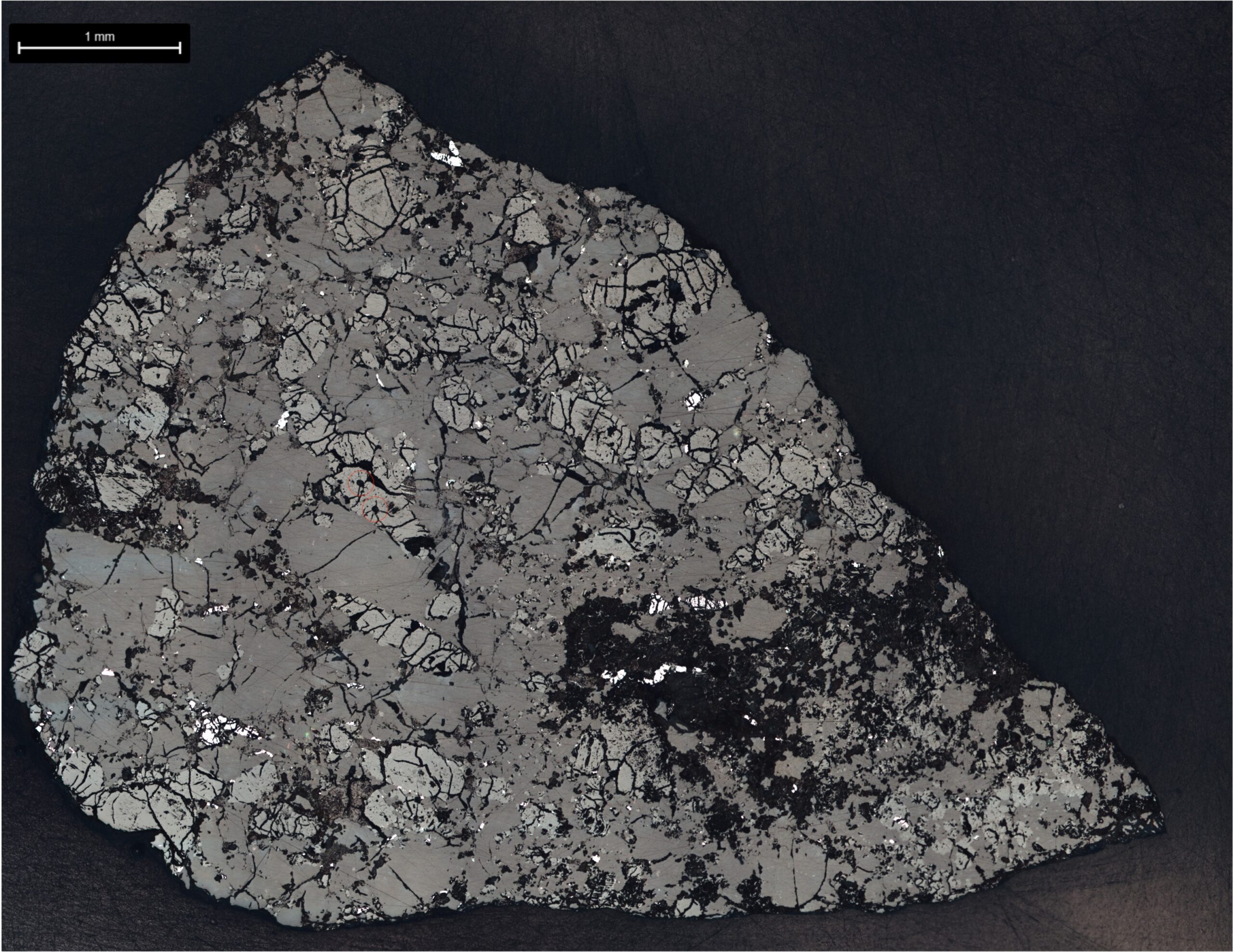
The key was zircon, a tough mineral that locks in uranium and lead and lets geologists measure ages precisely. The team analyzed shocked zircon grains and found a weighted average uranium-lead age of about 4.114 billion years, give or take 17 million years. Earlier lead-lead dating of phosphate minerals in the rock gave a consistent result.
Caltech coauthor Francois Tissot’s group also used an in-place rubidium-strontium method that analyzes single mineral grains on a fragment smaller than a fingernail, rather than dissolving a whole sample. That approach gave a less precise but consistent age of about 4.24 billion years, with an uncertainty of roughly 200 million years.
There is an important nuance. The authors argue that the roughly 4.1-billion-year date most likely records hot water altering the rock shortly after it crystallized from magma, not the crystallization itself. That is why the paper describes the rock as having formed “at least” 4.1 billion years ago, placing it in Mars’ earliest geological era, before the period known as the Noachian.
Signs of water and a new part of Mars
Teghaza 001 is a slowly cooled igneous rock whose composition, minerals and texture differ from other Martian meteorites. The researchers conclude that it samples ancient crust that formed from a chemically distinct mantle source. Altered minerals and oxygen isotope measurements indicate the rock reacted with fluids enriched in the heavier oxygen-18 isotope before an impact blasted it into space.
“This is really our first piece of Martian crust from a part of Mars we’ve never had a sample of before,” said second author Lee Saper, who did the work as a JPL postdoctoral scholar and is now at NASA’s Ames Research Center. “It records interactions of water and rock and maybe even an imprint of the Martian atmosphere as it was losing water.”
Nobody can say exactly where on Mars the rock came from. But using data from NASA’s Mars Reconnaissance Orbiter, the team identified 13 locations whose mineralogy and chemistry match the meteorite, all pointing to the heavily cratered southern highlands. NASA notes that Teghaza 001 joins ALH84001 as one of the three most ancient Martian meteorites found on Earth, but its mix of igneous minerals tells a fuller story of how the early crust cooled from magma and was later altered by water underground.
A separate paper in Science Advances earlier this year described the meteorite’s water content. The team says more studies should follow. “We’ve only scratched the surface,” Liu said.
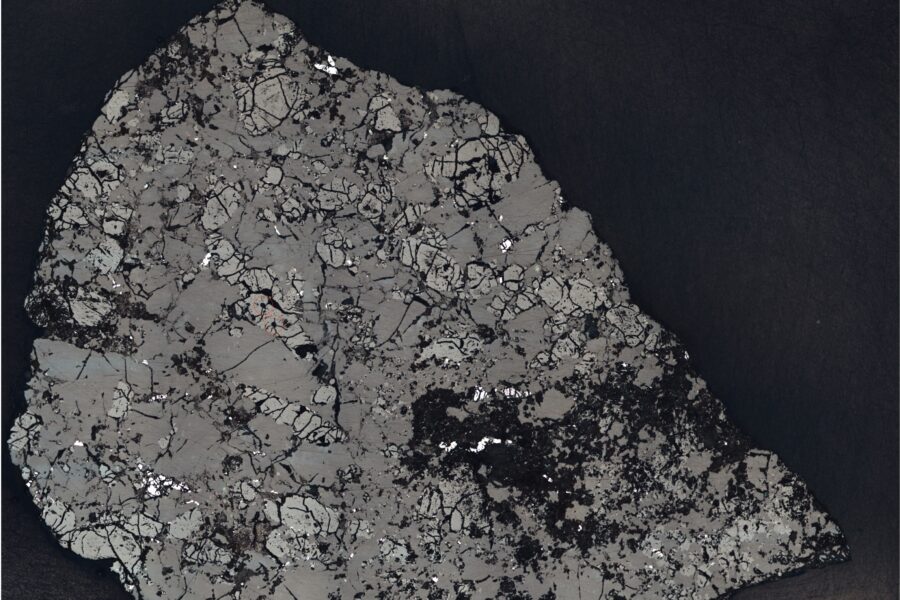
Image: A polished slice of Teghaza 001 seen in reflected light, used to find minerals for age dating. The scale bar shows 1 millimeter. Credit: NASA/JPL-Caltech (PIA26801).
Sources
Sources
- A Martian meteorite that formed ≳4.1 billion years ago samples Mars’ early crust and mantle — Liu et al., Science, October 29, 2026. Consulted 2026-11-01.
- NASA-funded Study Details One of Oldest Mars Meteorites Ever Found — NASA/JPL, October 29, 2026. Consulted 2026-11-01.
- Slice of Martian Meteorite Teghaza 001 (PIA26801) — NASA Photojournal. Consulted 2026-11-01.
- Map Showing Potential Origins of Martian Meteorite Teghaza 001 (PIA26802) — NASA Photojournal. Consulted 2026-11-01.
- Meteoritical Bulletin entry for Teghaza 001 — Meteoritical Society. Consulted 2026-11-01.