NASA’s Neil Gehrels Swift Observatory, which spent nearly 22 years chasing the most powerful explosions in the universe, is expected to fall back into Earth’s atmosphere within days. The spacecraft is no longer operating, a commercial rescue attempt never got the chance to grab it, and reentry forecasts now point to the first week of November.
Swift conducted its final observation on October 20, 2026. According to NASA, the observatory had sunk to 171 miles (275 kilometers) above Earth that day, low enough that atmospheric drag overwhelmed its ability to hold steady. It entered safe mode, and the operations team at Penn State then sent a command that effectively ended the mission to prepare the spacecraft for reentry.
When and where could Swift come down?
Nobody can say precisely yet. Swift’s descent is uncontrolled, and the density of the upper atmosphere changes with solar activity, so predictions keep shifting. The Aerospace Corporation’s reentry page lists a predicted time of November 4, 2026, at 09:30 UTC, with an uncertainty of plus or minus 26 hours. The Associated Press reported that the U.S. Space Force predicts reentry on or around Friday, November 6. Forecasts like these usually narrow only in the final hours.
Swift’s orbit is tilted only about 21 degrees from the equator, so any reentry point lies in a band between roughly 21 degrees north and 21 degrees south latitude. That band is mostly ocean, though the AP noted it also takes in land areas including parts of Africa, India, Southeast Asia, and Australia.
Most of the roughly 1.5-ton observatory is expected to burn up. As reported by the AP, mission chief scientist Brad Cenko of NASA’s Goddard Space Flight Center said a handful of pieces made of dense tungsten, along with some mirror parts, could survive. Any surviving fragments would most likely land in the ocean.
A rescue that ran out of time
Every satellite in low Earth orbit feels some drag, but recent solar activity heated and expanded the upper atmosphere, and Swift began sinking quickly. In September 2025, NASA contracted Katalyst Space of Flagstaff, Arizona, to attempt a fast-turnaround rescue: send a robotic spacecraft to capture Swift, which was never designed to be serviced, and lift it to a higher orbit.
Katalyst’s LINK spacecraft launched in July 2026 on a Northrop Grumman Pegasus XL rocket. It then ran into an attitude control problem, and in August NASA and Katalyst decided LINK would not attempt the capture and boost. According to Katalyst, LINK still deployed its three robotic arms and closed to within roughly 12 to 15 kilometers of Swift before the company concluded the mission on September 25.
After the boost was called off, Swift resumed science work that had been paused to reduce drag. NASA says it observed hundreds of additional targets, from supernova remnants to active supermassive black holes and comets. That extra observing increased drag again, and the spacecraft resumed its rapid descent.
What Swift leaves behind
Swift launched on November 20, 2004, to solve a specific problem: gamma-ray bursts fade so fast that big telescopes could rarely catch them. Swift was built to detect a burst, share its position with observatories around the world, and swing its own X-ray and ultraviolet/optical telescopes onto the spot, typically within about a minute.
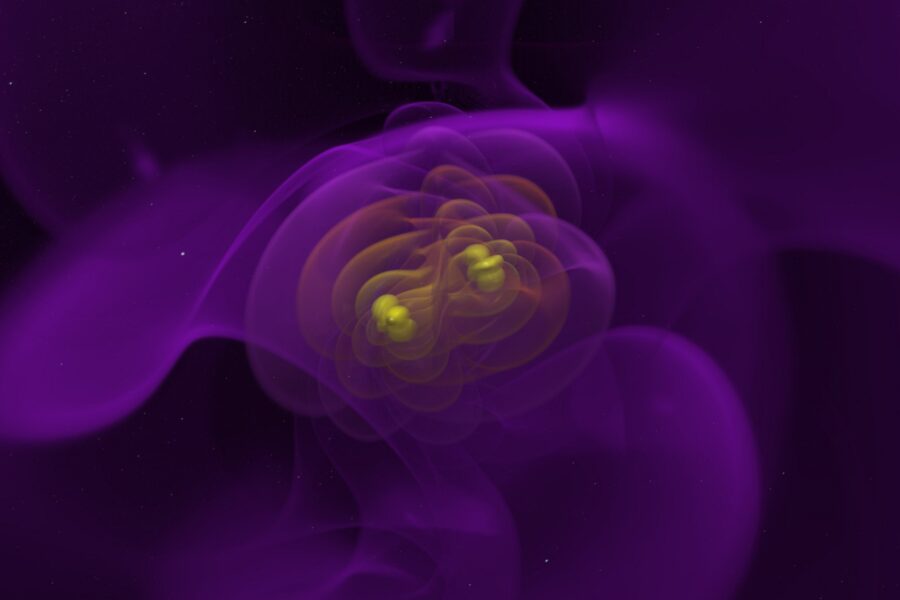
Designed for a two-year primary mission, it worked for more than ten times as long. NASA credits Swift with observing more than 2,000 gamma-ray bursts and more than 1,400 supernovae, and its data have contributed to about 7,000 published papers. In May 2005 it caught the afterglow of GRB 050509B, a burst lasting just 0.03 seconds. That made it the first short gamma-ray burst with a detected afterglow, and it supported the idea that such bursts likely come from merging neutron stars.
The mission’s roughly 12-terabyte archive, including more than 1.5 million images from its Ultraviolet/Optical Telescope, remains publicly available. NASA says it is exploring how existing space telescopes, commercial options, and new missions could help cover rapid-response astronomy after Swift is gone.
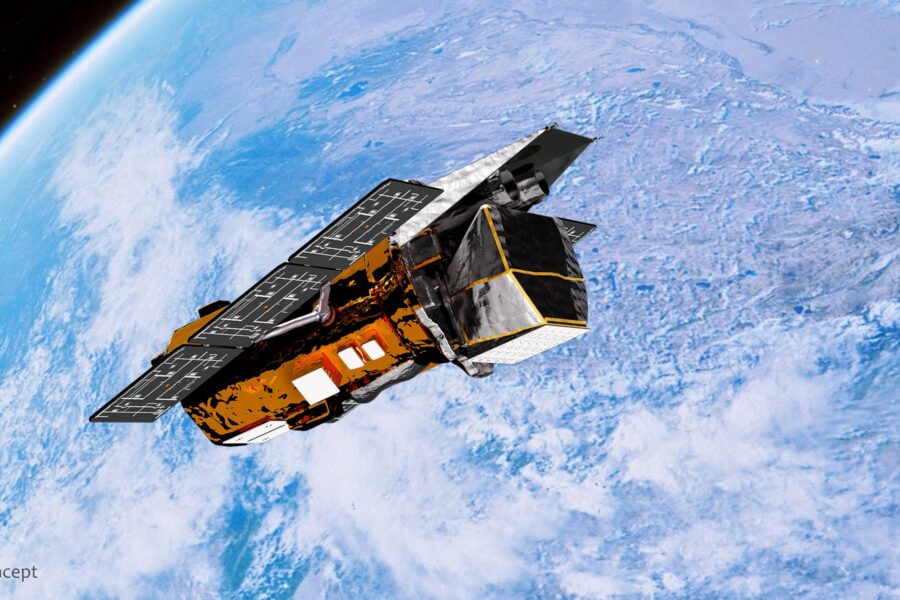
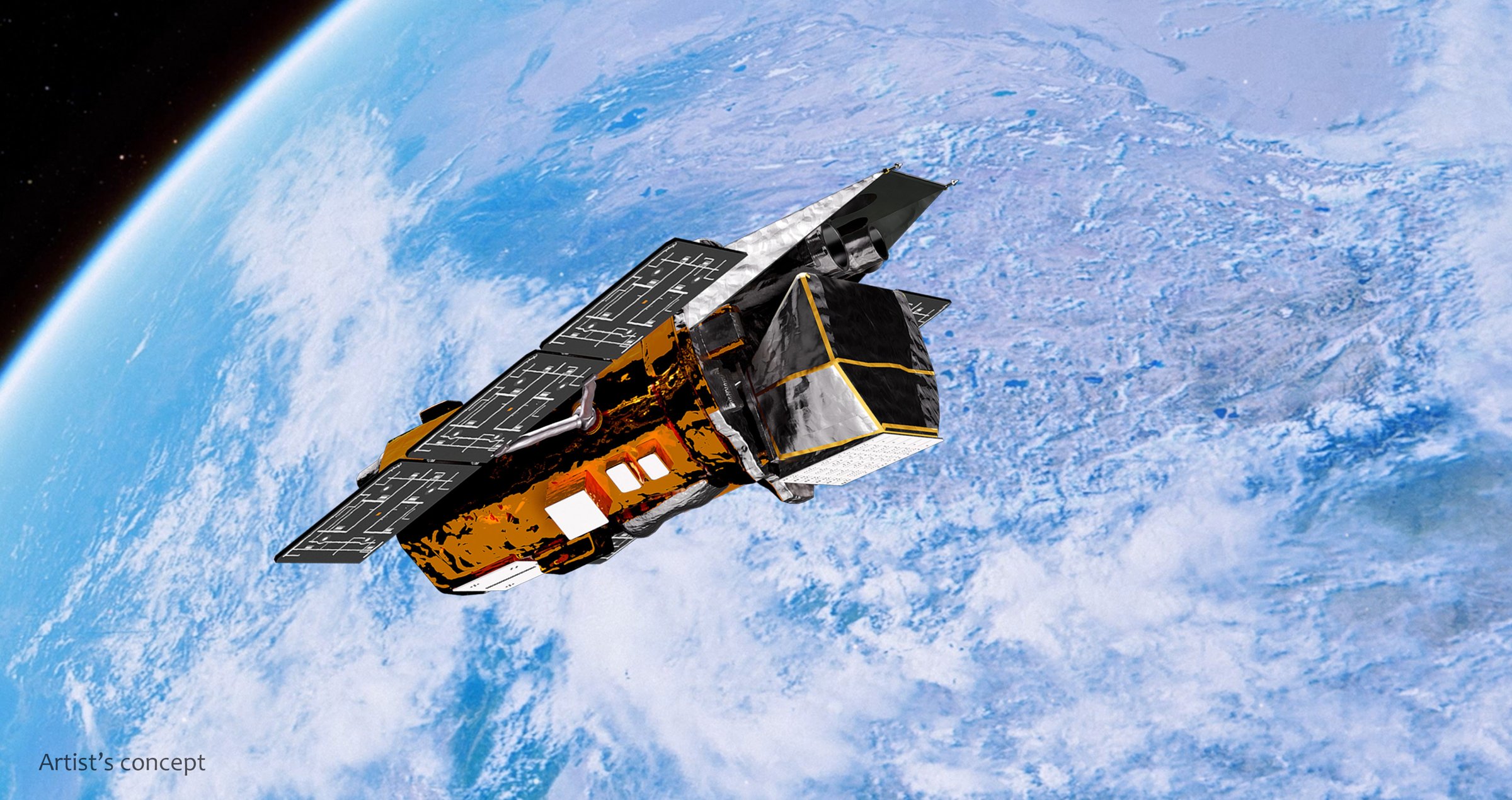
Featured image: Artist’s concept of NASA’s Neil Gehrels Swift Observatory in orbit above Earth. This is an illustration, not a photograph. Credit: NASA’s Goddard Space Flight Center Conceptual Image Lab.
Sources
Sources
- NASA’s Swift Mission Ends, Leaves Behind Scientific Bonanza — NASA Science, October 23, 2026. Consulted 2026-11-02.
- NASA’s Swift Mission Ends Ahead of Re-Entry — NASA Swift blog, October 23, 2026. Consulted 2026-11-02.
- Swift Boost Mission — NASA Science mission page. Consulted 2026-11-02.
- LINK Mission — Katalyst Space mission updates. Consulted 2026-11-02.
- SWIFT (ID 28485) reentry prediction — The Aerospace Corporation. Consulted 2026-11-02.
- NASA telescope is predicted to come crashing down after failed rescue mission — Associated Press. Consulted 2026-11-02.
- Fiery return expected for NASA’s Swift telescope this week — WRAL. Consulted 2026-11-02.