A telescope’s mirror and detectors get most of the attention, but for NASA’s Nancy Grace Roman Space Telescope, the bigger challenge is staying still. Two months after launch, its engineers say it is doing that very well.
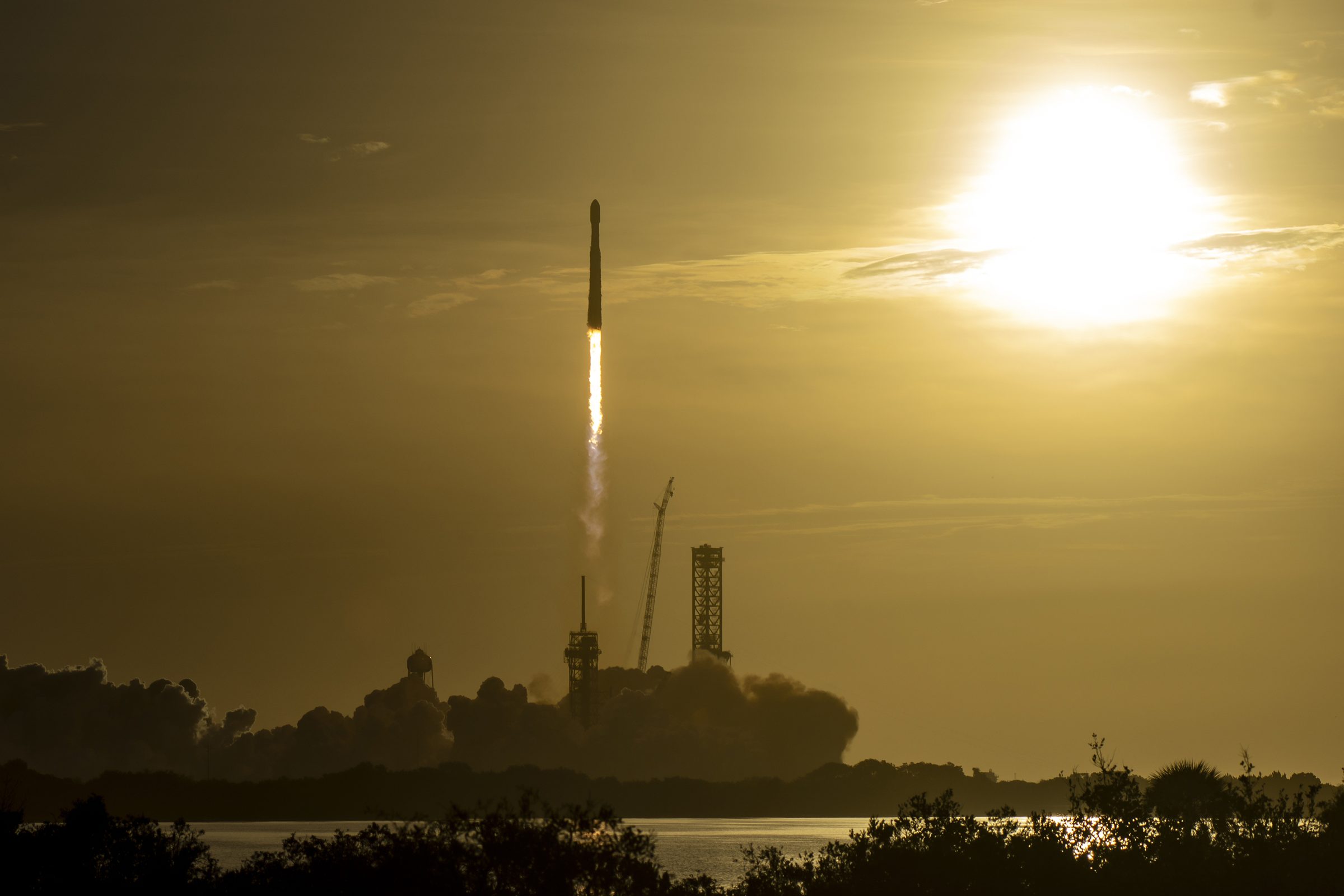
Roman launched on a SpaceX Falcon Heavy from Kennedy Space Center on August 30, 2026, at 7:26 a.m. EDT. It is flying to an orbit around the Sun-Earth L2 point, about a million miles from Earth. On October 22, NASA said the observatory had moved into science commissioning, the last phase of checkout before regular science operations. NASA has said it expects to release Roman’s first images by early 2027.
“We’ve established that the observatory is fully functional,” said Julie McEnery, Roman’s senior project scientist at NASA Goddard. The team is now testing image quality in detail.
A survey telescope built for speed
Roman’s main mirror is 2.4 meters across, the same size as Hubble’s. Its purpose is different. The main instrument, the Wide Field Instrument, is a 300-megapixel infrared camera, and NASA says Roman’s field of view is at least 100 times larger than Hubble’s. Roman is built to map huge areas of sky quickly to study dark energy and dark matter, and to carry out a statistical census of planetary systems in the Milky Way.
For this kind of science, every image needs to be consistent. “Any imperfections that affect image quality must be minimized because even very small flaws could mask the small signals we are aiming to measure,” said Josh Schlieder, the Wide Field Instrument scientist.
Guiding without a separate guider
Most space telescopes have a dedicated guide camera. Roman uses its science detectors instead. In tests from September 15 to 21, the team assigned a small part of each of the Wide Field Instrument’s 18 detectors to track a guide star. Those positions go to the attitude control system about four times per second, so it can correct any drift.
According to NASA, the tests showed pointing stability better than 1/100,000 of a degree for half-hour Wide Field Instrument observations, and for eight hours during coronagraph observations. NASA compares this to keeping a laser focused on a U.S. dime about 150 miles away, and the team hopes to improve it further.
Roman will also try a guiding mode that NASA says has never been attempted: locking on to the detailed spectra of stars rather than only their point-like images.
Engineers were concerned that guiding might fail in crowded star fields or dusty nebulae. Tom Barclay, Roman’s operations project scientist, said test observations of these areas showed the system works well.
A coronagraph as a technology test
Roman’s second instrument, the Coronagraph Instrument, is a technology demonstration. Its job is to block starlight so faint planets and dusty disks nearby can be seen. It uses active optics to correct starlight leakage in real time, a capability that future missions like NASA’s proposed Habitable Worlds Observatory will need to image Earth-sized planets.
The coronagraph powered on September 1. On September 22, it took its first image of a faint star in the Large Magellanic Cloud, with its detectors intentionally kept warm to avoid contamination. A second test on September 27, with the detectors cooled, confirmed pointing by capturing many stars in a single frame. “We were kicking the tires, making sure light goes through the system,” said JPL instrument scientist Vanessa Bailey.
These early images only confirm the instrument works. Its main tests, such as how deeply it can suppress starlight, will be done during a long calibration period.
A longer life than planned
There is also good news on fuel. NASA reported on September 14 that a very accurate first course correction and other savings should more than double the mission’s potential operating life. Roman’s main mission is set for five years, so the extra fuel could support a longer extended mission if funding allows.
What comes next
Roman’s team is now working through test observations to calibrate the detectors and check image quality across the field. NASA expects to release Roman’s first images by early 2027. Because of its speed, the team says large mosaics that once required special campaigns will become routine.
Image: NASA/SpaceX (KSC-20260830-PH-SPX01_0003).
Sources
Sources
- NASA’s Roman Space Telescope Enters Final Commissioning Phase — NASA Science (Roman blog), October 22, 2026. Consulted 2026-10-31.
- NASA Checks Roman Guidance System, Takes First Coronagraph Observation — NASA Science (Roman blog), September 30, 2026. Consulted 2026-10-31.
- NASA’s Dark Universe-Seeking Nancy Grace Roman Space Telescope Launches — NASA, August 30, 2026. Consulted 2026-10-31.
- Roman Launch — NASA Science. Consulted 2026-10-31.
- Nancy Grace Roman Space Telescope mission page — NASA Science. Consulted 2026-10-31.
- Nancy Grace Roman Space Telescope blog archive (incl. Sept. 14, 2026 fuel-savings update) — NASA Science. Consulted 2026-10-31.